Birk’s Oath Against Becoming a Robber
Ronja, the Robber's DaughterBirk’s Oath Against Becoming a Robber is a solemn public refusal of the robber’s life expected of Birk by his father, Borka. Given in the stone hall after the leadership struggle between Matt and Borka, the oath makes Birk’s choice unmistakable: although the two robber bands are united under Matt’s authority, their children will not simply inherit the adults’ identities or ambitions.
Background and Expectations
Birk’s choice comes amid a conflict shaped by competing kinds of authority. Matt has detained Birk and uses him to pressure Borka to leave the North Fort; Borka condemns this as a vile use of his child, but promises to find somewhere safer for his people if Matt returns his son. Against this strained family and political backdrop, the later question of what Birk will become is not abstract: Borka assumes his son wants to be a robber chieftain, while Birk’s oath rejects that assumption.
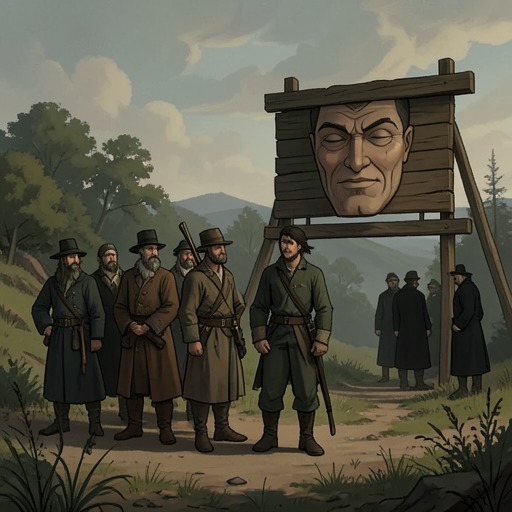
The wider world gives that inherited path practical weight. The Robbers’ Walk grows unusually peaceful while Borka’s band is preoccupied, and the sheriff’s men find the robbers’ former den deserted and empty of loot. Yet the robber life has not disappeared: Matt’s band remains active in the forest, beyond the sheriff’s reach. Birk’s refusal therefore concerns a continuing way of life, not a role that has already vanished.
The Oath in the Stone Hall
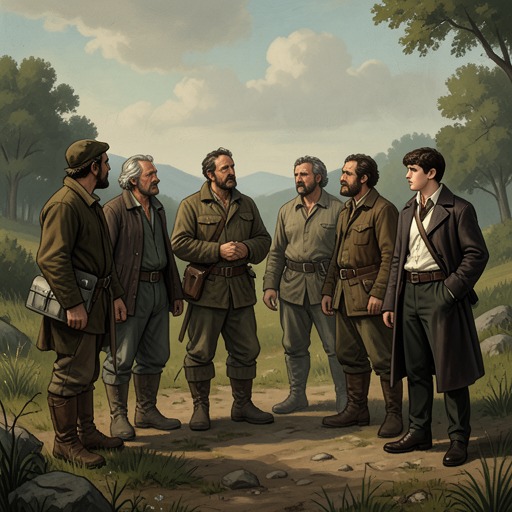
The vow follows the wild beasts’ match in which Matt defeats Borka. The contest permits brutal holds, biting, scratching, and kicking, with one forbidden blow that would immediately cost a fighter the match. Matt emerges bloody-faced, his shirt in rags, and is acknowledged as chief. He then calls Borka brother, allows him to retain a chieftain’s name and lead his own men, but makes clear that Matt’s word now carries greater authority.
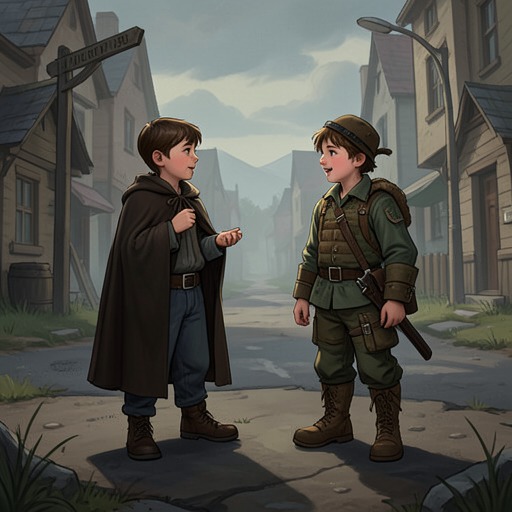
That evening, Matt holds a feast in the stone hall for both bands. Borka is delighted by the prospect that Birk will become a robber chieftain, and says so confidently. Ronia calls across the table to challenge that assumption. Birk then steps into view, raises his right hand, and swears that whatever happens, he will never become a robber. Rather than a private intention, the oath is a performative act: spoken before the gathered community, it publicly defines the future he refuses.
Family and Consequences
Borka responds with tears, lamenting a son who has let him down. His grief makes the cost of the vow plain: Birk is rejecting not only a profession but the future his father had imagined for him. Matt, who has had to accept a similar refusal from his own child, tries to console Borka by saying that parents must get used to children doing as they choose. The adults’ new brotherhood and the merger of their bands do not erase the generational disagreement.
The hall’s silence gives way, later, to a more practical conversation between Birk and Ronia. As they look forward to the disappearance of the snow and their return to Bear’s Cave, Ronia says she is glad he does not want to be a robber. Birk answers that he has taken an oath, then wonders how the two of them will live. Ronia proposes becoming miners and reminds him of Noddle-Pete’s silver mine, which a little gray dwarf once showed him in gratitude for his life. The oath thus ends not with a settled livelihood, but with a shared alternative to the robber future: work and a life they will choose for themselves.